
"post-harvest processing"
400 article(s) found

How do you produce the strange smell of coffee? How can I make coffee powder without tools?
How do you produce the strange smell of coffee? How can I make coffee powder without tools? In the process of brewing coffee, we all look forward to the moving moments full of fragrance: the wonderful and complex aromas of caramel, flowers, berries, nuts, honey and tea are absolutely the most fascinating thing about coffee. Coffee raw beans can detect more than 300 compounds, and coffee cooked beans are more than 850, complex.

A brief introduction to the planting market price of Puerto Rican boutique coffee beans with mellow taste
Island Coffee-Puerto Rico in Spanish, Puerto Rico means port of wealth. The history of coffee in Puerto Rico dates back to 1736, when coffee seedlings were brought into the country by early Spanish settlers. In the 18th world, sugar cane was the main economic crop, so little attention was paid to it. At the beginning of the 19th century, the French began to play a role in European politics.
[coffee planting] how should coffee producers deal with unexpected weather conditions?
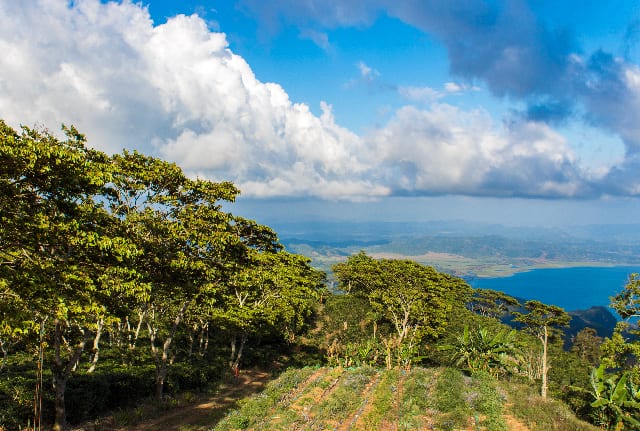
Professional coffee knowledge exchange more information about coffee beans Please follow the coffee workshop (official Wechat account cafe_style) in early July this year, coffee producing areas in Brazil were hit by frost. Coffee crops are being harvested, but weather conditions are expected to have an impact on next year's yield. When frost strikes, you can hardly protect your crops. But there are ways to deal with other unexpected days.

A brief introduction to the market price of boutique coffee beans in San Pedro Manor, Puerto Rico with a long aftertaste
This is also the reason why Puerto Rico and Puerto Rico Yukot Yauco Selecto are different. Yukot chooses manor beans, and Puerto Rico coffee beans are carefully planted by the three major estates of Puerto Rico San Pedro, Caracolillo and La Juanita. Puerto Rico coffee beans are pure, aromatic and granular, of which the best coffee is Yauco Selecto, S.

Coffee Culture in Guatemala
Coffee was really introduced into Guatemala in 1750 by Father Jesuit, where the coffee industry was developed by German colonists at the end of the 19th century.

Guatemala Solo Manor Coffee Solo Manor Yellow Bourbon Coffee Flavor Characteristics
The farm where the Malacatena Coffee House is grown was purchased by Dr. Mario de la Cerda and his wife Maria Colom in 1960. In 1980, their son Juan de la Cerda Colom started managing the farm and producing coffee there. Over the last eight years, they've evolved and changed significantly in how they handle coffee.

Puerto Rico fine coffee beans growing geographical location climate altitude profile
Island Coffee-Puerto Rico Puerto Rico, located in the eastern Greater Antilles in the Caribbean Sea, includes the island of Puerto Rico and the small islands of Vieques and Culefra. It is a beautiful island. It is bordered by the Atlantic Ocean to the north, the Caribbean Sea to the south, the United States and The British Virgin Islands to the east, and the Dominican Republic across the Mona Strait to the west. Land of Puerto Rico

Introduction of Guatemala Antigua coffee beans at high altitude in the center of the volcanic area
Antigua Flower God is the best of Antigua coffee. It belongs to the famous beans of the well-known La Minita group. Produced by Las Pastores Beneficio, a well-known processing plant in Antigua. Antigua Flower God comes from the high altitude in the center of Antigua volcanic area. Costa Rica's famous Raminita Manor offers the highest standards in the industry.

A brief introduction to the history and culture of the origin and development of Puerto Rico boutique coffee beans with mellow taste
With the cheerful music of the Caribbean, sitting under the open-air teahouse and tasting the amorous feelings of Puerto Rico, the naughty sun photocopied the trees on your face from time to time, and when you closed your eyes, it felt as if you were instantly on the beach of the Caribbean, how romantic and cozy it was, and Ja (Ja, president of Escogido Yauco), acting bank of Escokidoyaoke.

How to distinguish the quality of coffee beans
How to distinguish the quality of coffee beans When observing that a certain manor bean has a unique and good flavor, bean hunters often persist, spend years of cup testing, observation, and try to understand the relevant reasons. In the case of Eridani, we find a crop that grows similarly to coffee. Planting ring suitable for high-altitude high-quality coffee

A brief introduction to the Market Price of Puerto Rico Fine Coffee Bean varieties with stable acidity
Island Coffee-Puerto Rico and Jaime Fortuno, president of Escokidoyaoke (Escogido Yauco), silently pays attention to all this work every year, even the smallest details. Fortuno is an investment banker who graduated from Harvard Business School. He was determined to seize every opportunity to open up a top coffee market in Puerto Rico.

Guatemala Vivette Nanguo Coffee Flavor Guatemala Vivette Nan Fruit Coffee is good?
Professional coffee knowledge exchange more coffee bean information please follow the coffee workshop (Wechat official account cafe_style) Huehuetenango (often referred to as Huehue) is located in western Guatemala, bordering Mexico. The Hugh region of the non-volcanic highlands is protected from frost, thanks to dry hot winds blowing from the Trent Peck Plain in Mexico. This allows planting at extreme elevations to create good
Guatemala Antigua Fine Coffee Coffee beans
La Flor del is the star product of La Minita Manor. La Flor del literally means "Coffee Flower". It comes from the high altitude in the center of the volcanic area of Antigua, has unique volcanic soil and shade planting, and lays a good foundation for excellent quality.
Antigua Coffee, Guatemala (Guatemala Antigua)
Antigua's "Antigua Flower God" is the best of Antigua coffee, which belongs to the famous beans of the well-known La Minita group. Produced by Las Pastores Beneficio, a well-known processing plant in Antigua.

A brief introduction to the planting Market Price of Puerto Rican Fine Coffee Bean varieties with Pure aromatic granules
There are also professional reviewers who randomly take one bag of coffee from every 50 bags as samples and use international gauges to identify the quality of the coffee beans, all in order to ensure the quality of the real Yaocote selected coffee, and Jaime Fortuno, the president of the Escoki Doryaoke (Escogido Yauco) agency, watches silently every year.

A brief introduction to the planting Market Price of Fine Coffee Bean varieties in Puerto Rico with rich fruit flavor
Island Coffee-Puerto Rico and Jaime Fortuno, president of Escokidoyaoke (Escogido Yauco), silently pays attention to all this work every year, even the smallest details. Fortuno is an investment banker who graduated from Harvard Business School. He was determined to seize every opportunity to open up a top coffee market in Puerto Rico.

A brief introduction to the planting market price of Puerto Rican boutique coffee beans with unique flavor
Island Coffee-Puerto Rico in Spanish, Puerto Rico means port of wealth. The history of coffee in Puerto Rico dates back to 1736, when coffee seedlings were brought into the country by early Spanish settlers. In the 18th world, sugar cane was the main economic crop, so little attention was paid to it. At the beginning of the 19th century, the French began to play a role in European politics.

A brief introduction to the cultivation of fruity boutique coffee beans in Puerto Rico, geographical location, climate and altitude
Puerto Rico's coffee beans are carefully planted, pure, aromatic and heavy, of which the best coffee is Yauco Selecto, which means Selecto. Yaocote Coffee is grown only on three farms in the southwest of the island, San Pedro, Caracolillo and La Juanita. It is a truly high-quality coffee with a strong flavor and a long aftertaste. Puerto Rico
Guatemala Antigua Flower Coffee
Coffee was really introduced into Guatemala in 1750 by Father Jesuit, where the coffee industry was developed by German colonists at the end of the 19th century. Today, most of the coffee industry's production takes place in the south of the country. There are seven main coffee producing areas in Guatemala: Antigua, Coban, Atitlan and Huehuet.

A brief introduction to the description of flavor, taste and aroma characteristics of Puerto Rican boutique coffee beans with rich fruit flavor
Island Coffee-Puerto Rico and Jaime Fortuno, president of Escokidoyaoke (Escogido Yauco), silently pays attention to all this work every year, even the smallest details. Fortuno is an investment banker who graduated from Harvard Business School. He was determined to seize every opportunity to open up a top coffee market in Puerto Rico.